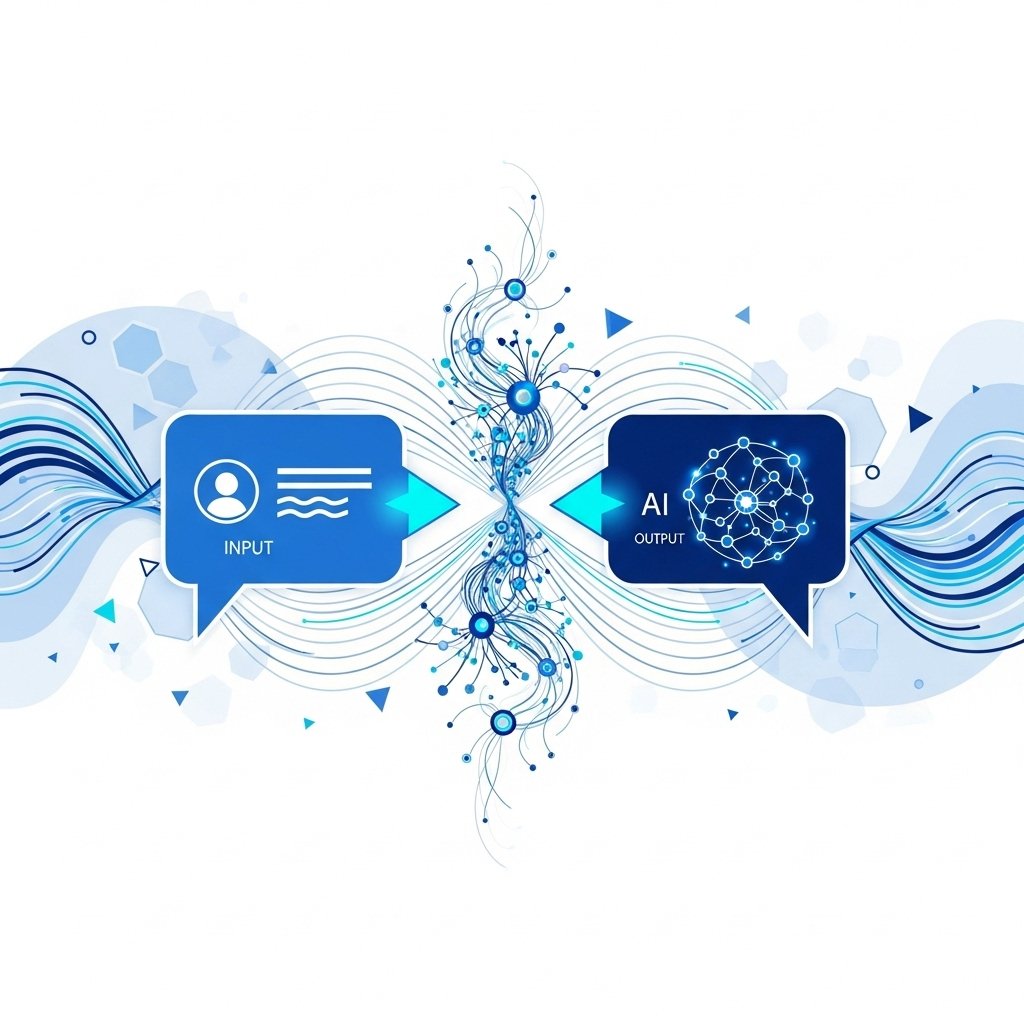
How to Talk to AI and Get Better Results: AI Prompting Basics
AI tools have become incredibly powerful, but there's a significant gap between what they're capable of and what most people get from them. The difference isn't the technology—it's how you interact with it.
Getting good results from AI isn't magic. It's about understanding how to communicate effectively with these systems. Master a few fundamental techniques, and your AI interactions transform from occasionally useful to consistently powerful.
What is Prompting?
A prompt is your instruction to an AI system—the question you ask or the task you assign. It might be as simple as "Summarize this article" or as complex as "Analyze this dataset for seasonal patterns and identify the three most significant factors driving customer behavior changes in Q4."
The AI interprets your prompt and generates a response based on its training and your specific instructions. Better prompts consistently produce more useful responses.
The difference between weak and strong prompting is often the difference between AI being a novelty and AI being a genuine productivity multiplier.
Core Principles That Matter
Specificity Over Vagueness
Vague prompts produce generic results. "Write about marketing" gives the AI almost nothing to work with. "Write a 300-word overview of email marketing best practices for small e-commerce businesses" provides clear direction.
The more specific your prompt, the more targeted the response. This isn't about making prompts longer—it's about making them clearer. Specify what you need, who it's for, what format works, and what constraints matter.
Context Is Critical
AI performs dramatically better when it understands the situation. Instead of asking "Should we expand to this market?" provide context: "We're a B2B software company with 50 employees, $5M revenue, considering expansion to Canada. Our product requires regulatory compliance. Should we expand now or wait?"
Context transforms generic advice into relevant guidance. Include background that helps the AI understand your specific situation, goals, and constraints.
Examples Show What You Want
Sometimes showing is more effective than telling. If you need content in a particular style, show an example. If you want analysis in a specific format, provide a sample.
"Format the report like this: [example]. Include these metrics: [list]. Focus on month-over-month changes." This is clearer than trying to describe the exact format you want.
Break Down Complexity
Complex tasks often work better when broken into steps. Instead of "Analyze this dataset and give me a complete strategy," try:
1. "What are the key patterns in this data?"
2. "Which patterns represent the biggest opportunities?"
3. "For the top two opportunities, what specific strategies could we pursue?"
This step-by-step approach often produces better results than one massive prompt.
Iterate and Refine
Your first prompt rarely needs to be perfect. Start with a clear instruction, review the output, then refine:
"That's helpful, but focus more on cost implications and less on technical implementation."
This iterative approach gets you to great results faster than trying to perfect a single prompt.
Common Mistakes to Avoid
Too Little Direction
"Help me with sales" is too vague. What aspect of sales? What's your goal? What information would be helpful? Give AI enough direction to provide relevant help.
Too Many Requests at Once
Trying to get everything in one prompt often produces incomplete results. "Analyze this data, create a presentation, write a summary, and identify next steps" is overwhelming. Break it into focused requests.
Missing Format or Length Requirements
If you need specific formatting (bullet points, tables, paragraphs) or specific length (200 words, one page, detailed analysis), say so. Otherwise AI makes its own choices, which might not match your needs.
Search Engine Thinking
AI isn't Google. It doesn't find information—it generates responses based on your instructions. Ask it like you'd ask a knowledgeable assistant, not like you're entering search keywords.
Advanced Techniques
Role Assignment
Ask AI to take on a specific perspective: "Act as a financial analyst reviewing this budget" or "Respond as a customer service expert addressing this complaint."
This focuses the AI's approach and often produces more relevant responses.
Constraint Setting
Define boundaries: "Explain this assuming no technical background" or "Provide recommendations implementable with under $5,000 budget."
Clear constraints help AI tailor responses to your actual situation.
Multiple Perspectives
Request different viewpoints: "List pros and cons" or "Consider this from both customer and business perspectives."
This produces more balanced, thoughtful analysis.
Assumption Challenging
Ask AI to question your thinking: "What assumptions in this plan might be wrong?" or "What risks am I not considering?"
This helps identify blind spots.
Practical Application
Getting consistently good results comes down to a few practices:
Start Clear: Begin with specific, well-directed prompts. What exactly do you need? What context matters? What format works?
Review Critically: Look at the response and identify what's useful and what's missing. Don't accept the first response if it's not quite right.
Refine Based on Results: Use what you learn from each response to improve your next prompt. "That's good, now focus on X" or "Go deeper on this aspect."
Save What Works: When you find prompt structures that work well for recurring tasks, save them as templates.
The Impact of Better Prompting
The difference between basic and skilled prompting is substantial. Basic prompting might save you a few minutes here and there. Skilled prompting can transform your productivity.
You move from AI being occasionally helpful to AI being a genuine force multiplier. Tasks that took hours take minutes. Analysis that required expert consultation happens instantly. Content that would need multiple drafts comes out right the first time.
This isn't about the AI being more capable—it's about you being more capable of accessing what AI can do.
At anelion, we teach businesses how to interact with AI effectively. Prompting skill isn't a nice-to-have—it's fundamental to getting value from AI. We help teams develop these capabilities so AI becomes truly productive.
Getting good at prompting isn't difficult, but it does require some practice and attention. The return on that investment is massive. Every interaction with AI becomes more productive. Every task becomes more efficient. Every result becomes more useful.
The businesses pulling ahead with AI aren't using different tools—they're using the same tools more effectively. And it starts with knowing how to ask.
To learn more about developing AI capabilities in your organization, contact us at
[email protected].